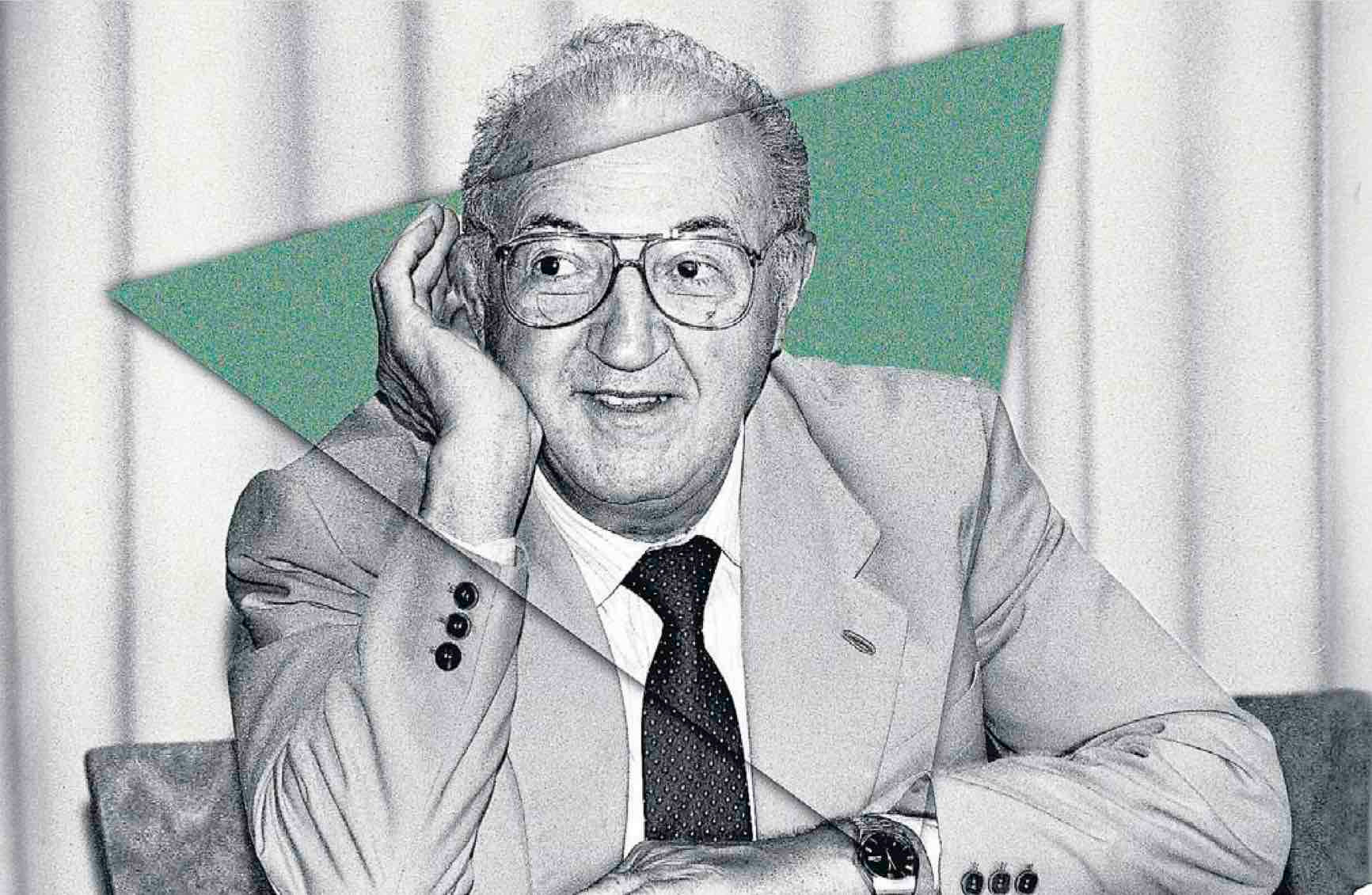
Do you get it Mr. Joan Oro?
Originaly published in Catalan in ARA, October 20th 2023
When Joan Oró went to the United States for his phd studies, he spoke very limited English. One of his early professors used to punctuate his explanations by asking students, "¿you get it?" to confirm if they were understanding, but Oró understood it so little that he didn't even grasp the meaning of "you get it."
During his youth, Oró had studied German thoroughly, which at that time was the dominant language in scientific communication. However, when the time came to study abroad, the intellectual attraction focus had shifted to the other side of the Atlantic. So, he had to learn English quickly, quite self-taught, trying to compensate for his linguistic deficiencies with the deep knowledge he already had of chemical jargon and notation.
Years later, in the interviews he always gave during his frequent visits to Catalonia, he used to speak with a funny accent that combined Western Catalan with constructions that sounded like American English from Houston. In fact, Oró's mind constantly jumped from one language to another, as evident in his personal notebooks, where he detailed and neatly recorded the myriad thoughts that constantly bubbled in his head.
I believe that this amalgamation of languages represents very well two fundamental characteristics of Oró: on the one hand, his ability to adapt to diverse and often complicated contexts (Oró moved with the same ease in the workshop of a bakery in Lleida as among a committee of experts at NASA); on the other hand, his firm determination that human borders would not obstruct his passionate journey through the vast territories of scientific research. His professional biography underscores, time and again, his ability to synergistically combine these two facets.
Oró arrived in the United States in the midst of the Cold War, a time when science and technology were conceived almost in warlike terms of the struggle for world hegemony. Projects like manned missions to the Moon were much more driven by the desire to be the first to plant the flag than by any genuine interest in the progress of human knowledge. Despite this, Oró knew how to adapt to this bleak panorama with enough skill to channel some of the immense resources available to answer questions (Where do we come from? How did life begin?) that were not at the epicenter of the scientific competition between the opposing blocs.
On the other hand, despite successfully climbing to the elite of American science, Oró maintained very good relations with scientists on the other side of the Iron Curtain. Among them, the deep friendship with Alexander Oparin stood out, the founder of studies on the origin of life and a prominent scientific figure in the Soviet world. Today we know (and Oró probably suspected) that the frequent correspondence he maintained with Oparin was monitored word by word by U.S. intelligence services. It was not common for scientists of his level to maintain this kind of relationship.
All of this seems to demonstrate that Oró's priorities did not always fully align with those of the socio-political machinery in which he was immersed. For him, studying the origin of life responded to an almost existential need, not to a strategy of domination on the Machiavellian board of international power.
Oró never criticized the American scientific apparatus or the socio-political structure that supported it (rather, he often praised its ability to stimulate innovation and research). But his conception of science reflected a much more humanistic vision than the one underpinning the frenzied technological race of the Cold War. He firmly believed that studying the origin of life could lead to profound ethical changes. According to his vision, proving that life is nothing more than the fortunate combination of very simple molecules found throughout the universe would make us all more humble, which could only have positive consequences. "This business of races is a story; fundamentally, we are all brothers," he often said in his interviews, advocating, as he usually did, for greater international solidarity.
Whether speaking in his Houston Catalan or his Lleida English, in his lectures, Joan Oró always reminded that Earth, seen from space, is nothing more than a tiny, fragile planet suspended in the midst of immensity. For him, the lessons that this image conveyed were clear: humanity had to become aware that the resources it had were limited and needed to be managed rationally and cooperatively. Failing to do so, our future would be quite bleak. I never heard him say it, but I can easily imagine that after making these statements, he would lift his gaze to his audience and, with his sly smile, ask them: "¿you get it?"
Post a comment